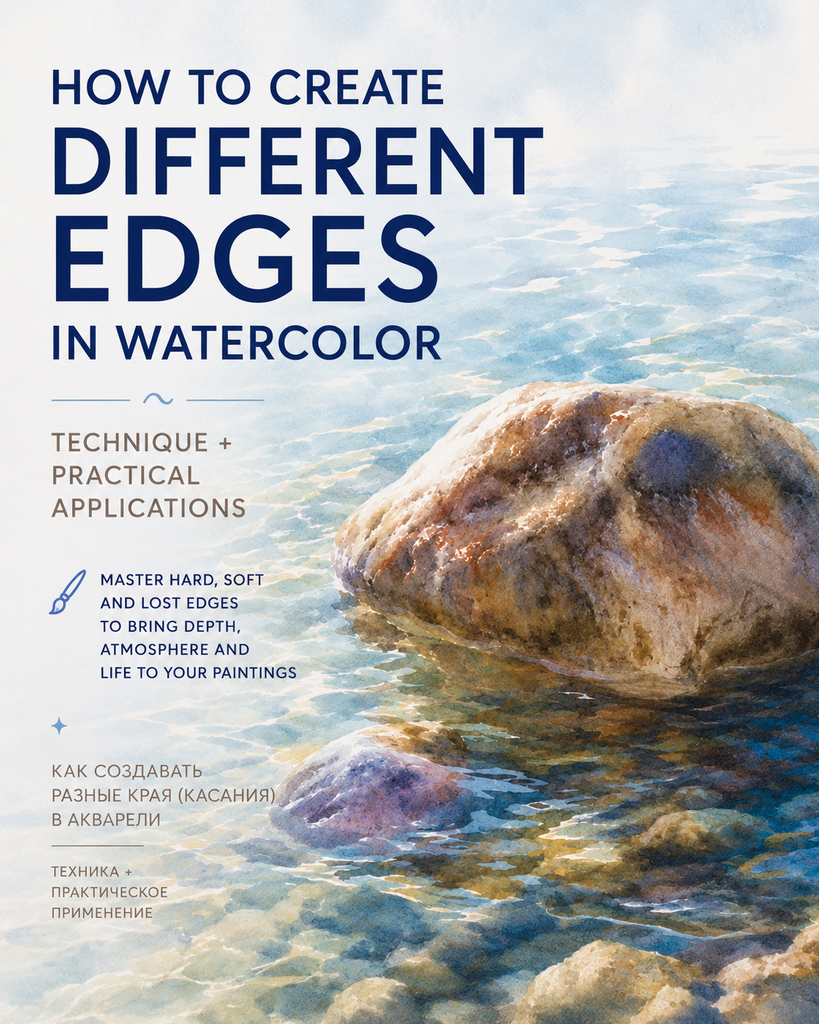
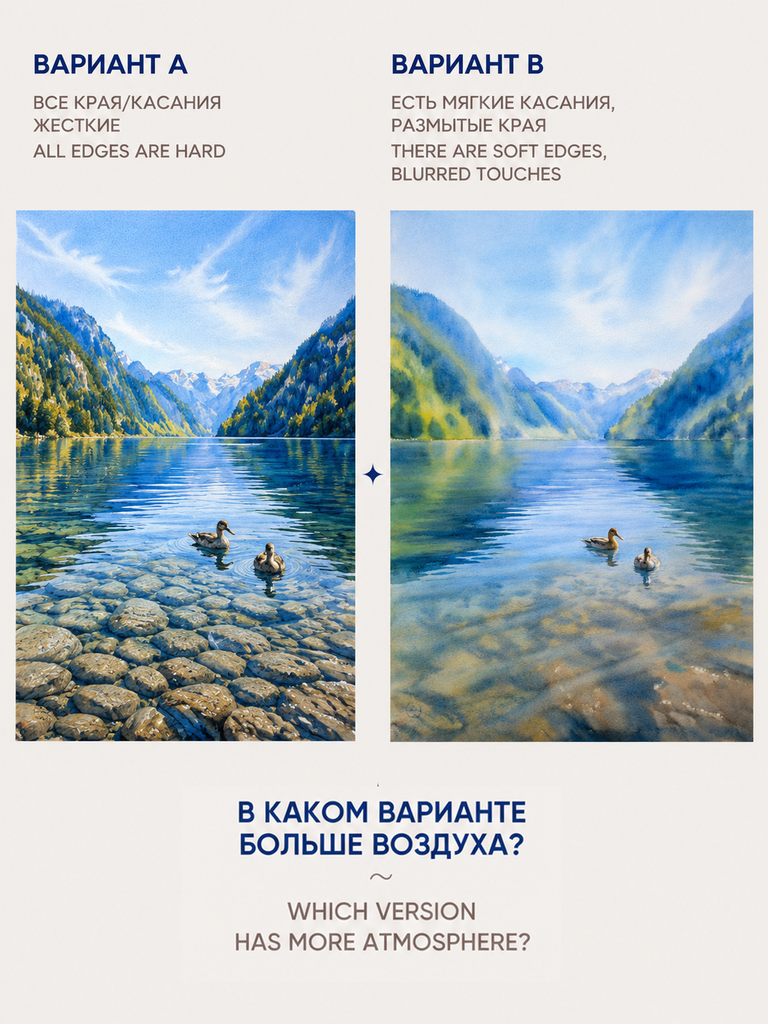
In the previous educational post, we looked at why different types of edges make a painting feel more natural and help guide the viewer’s eye. This time, we’ll focus on how to create them and when to use them.
In this carousel, you’ll learn:
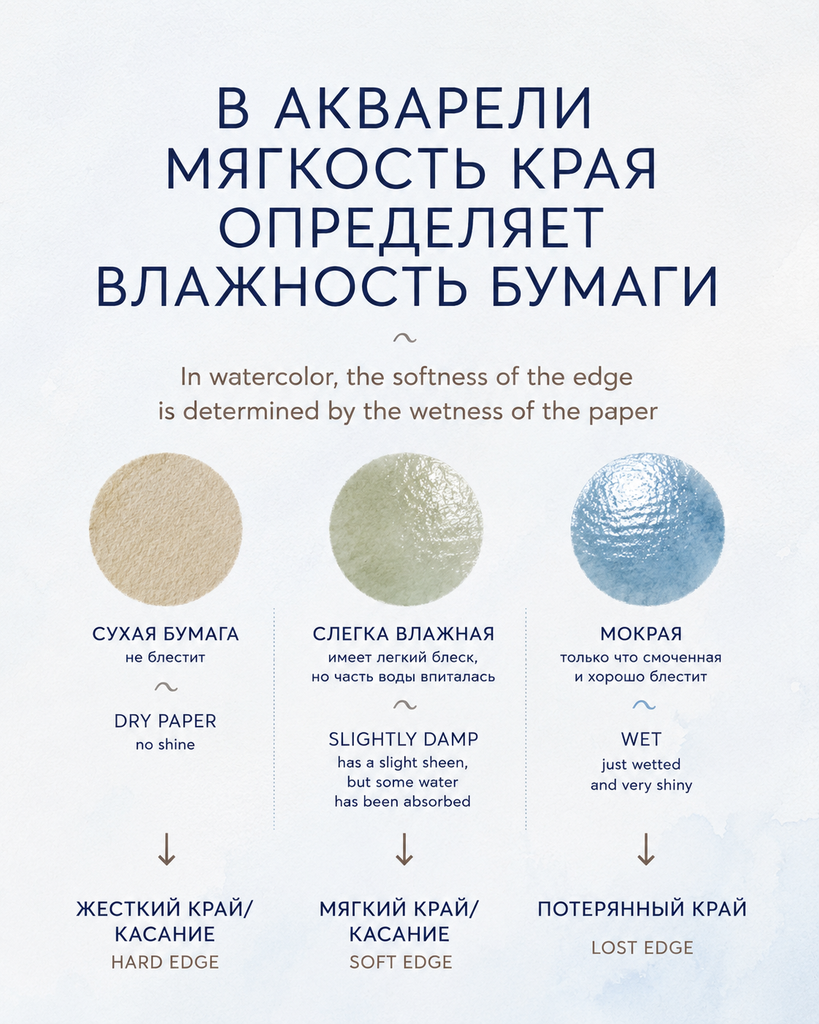
• what determines the character of an edge and how to control it through paper moisture;
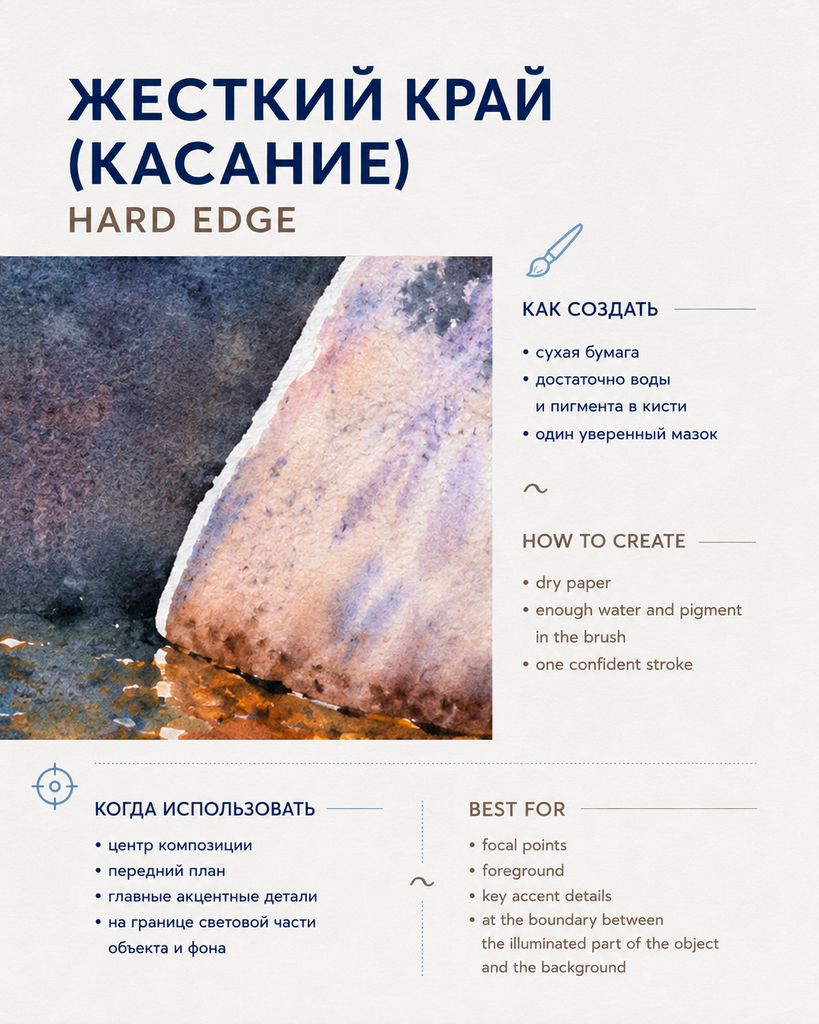
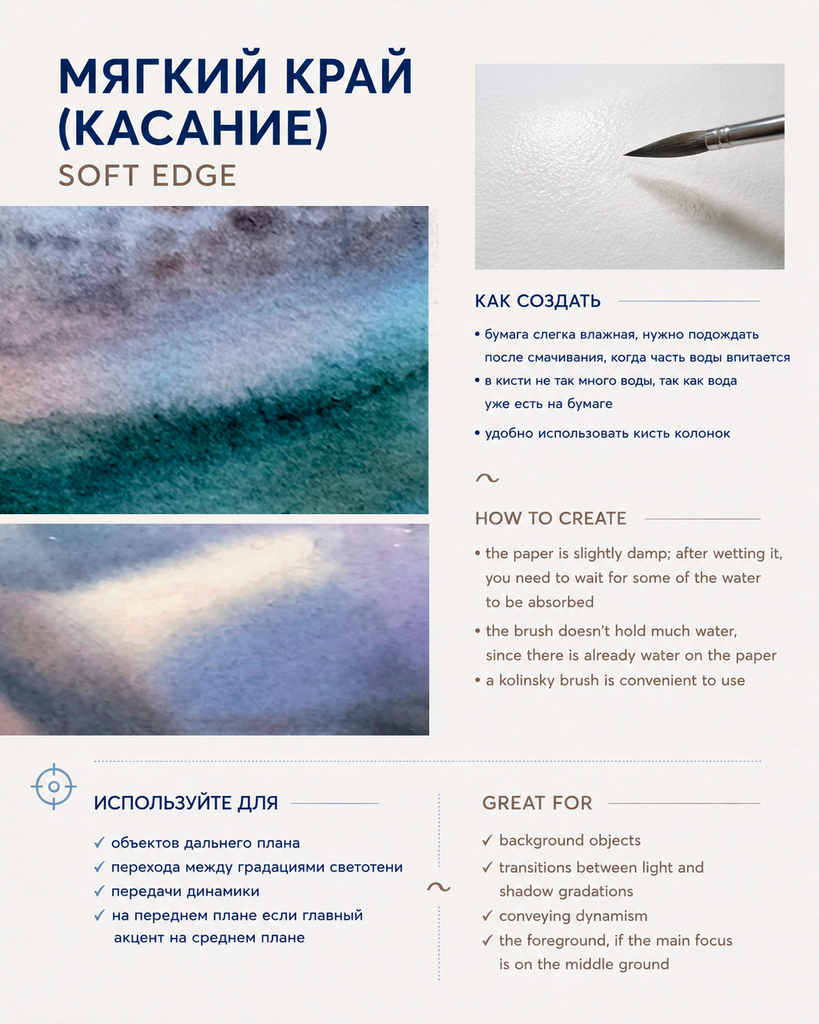
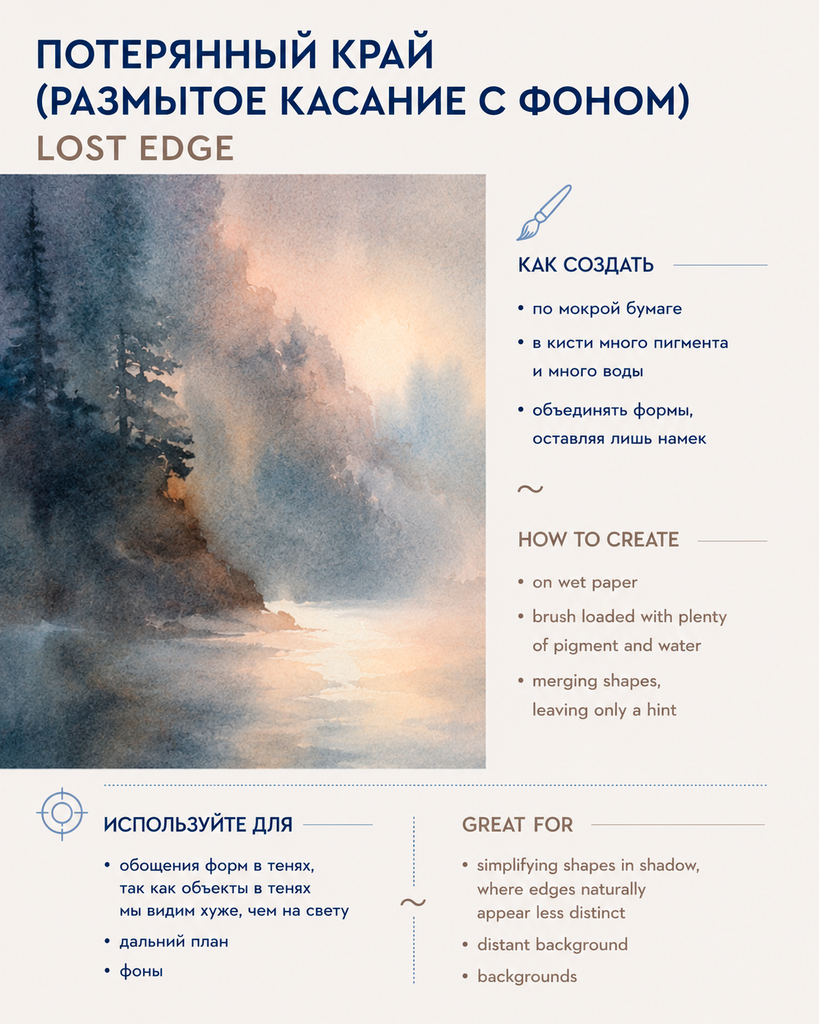
• how to create hard, soft, and lost edges;
• when each type works best;
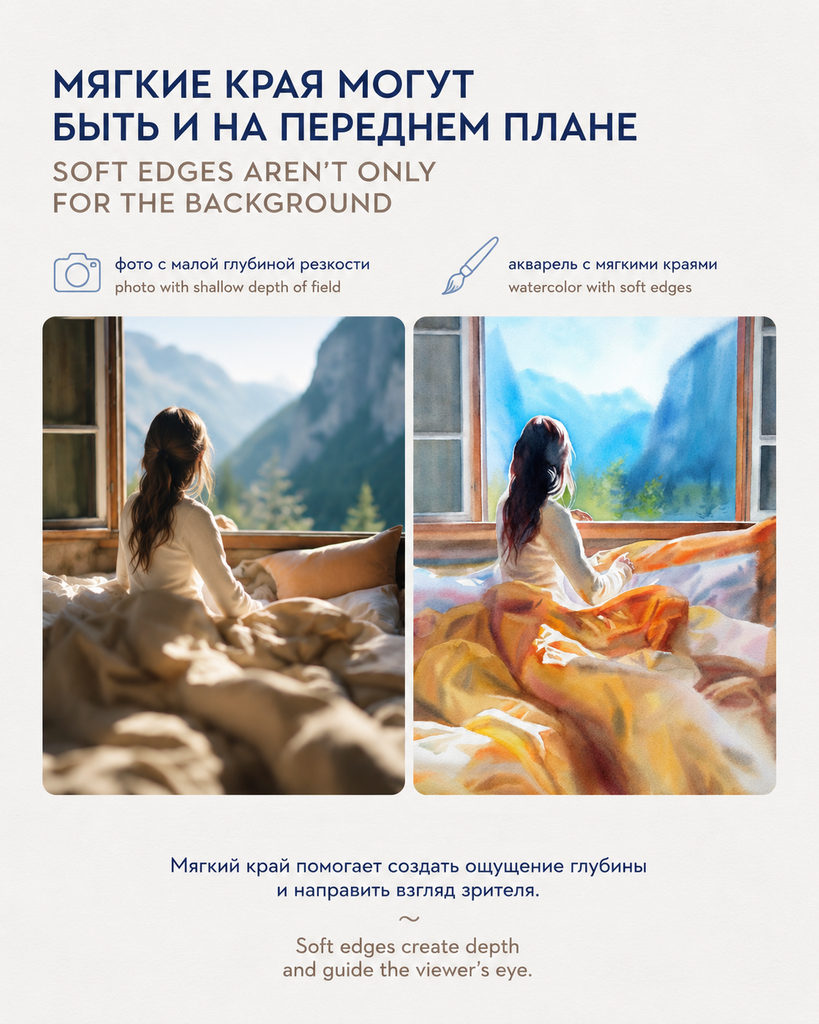
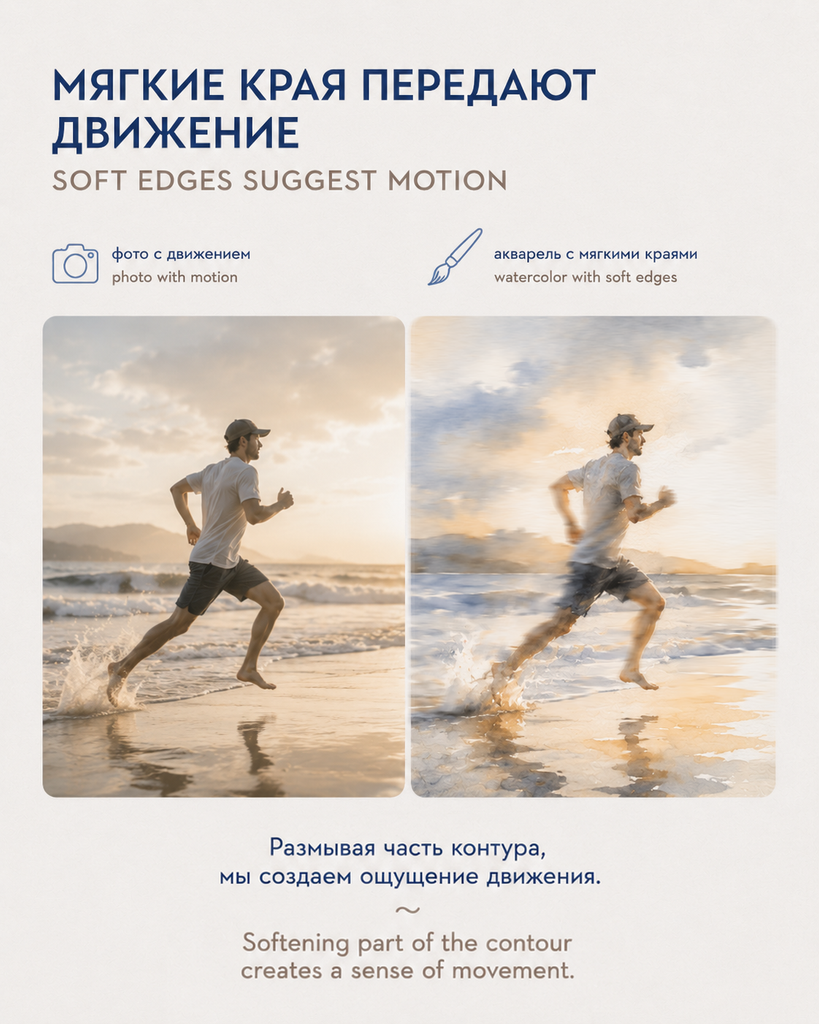
• why soft edges aren’t just for the background—they can also be used in the foreground to create depth, selective focus, and a sense of motion.
Understanding edges is one of the most valuable watercolor skills. It can dramatically improve your paintings without changing your materials or relying on complicated techniques.
Save this carousel and keep it as a handy reference for your next painting session.