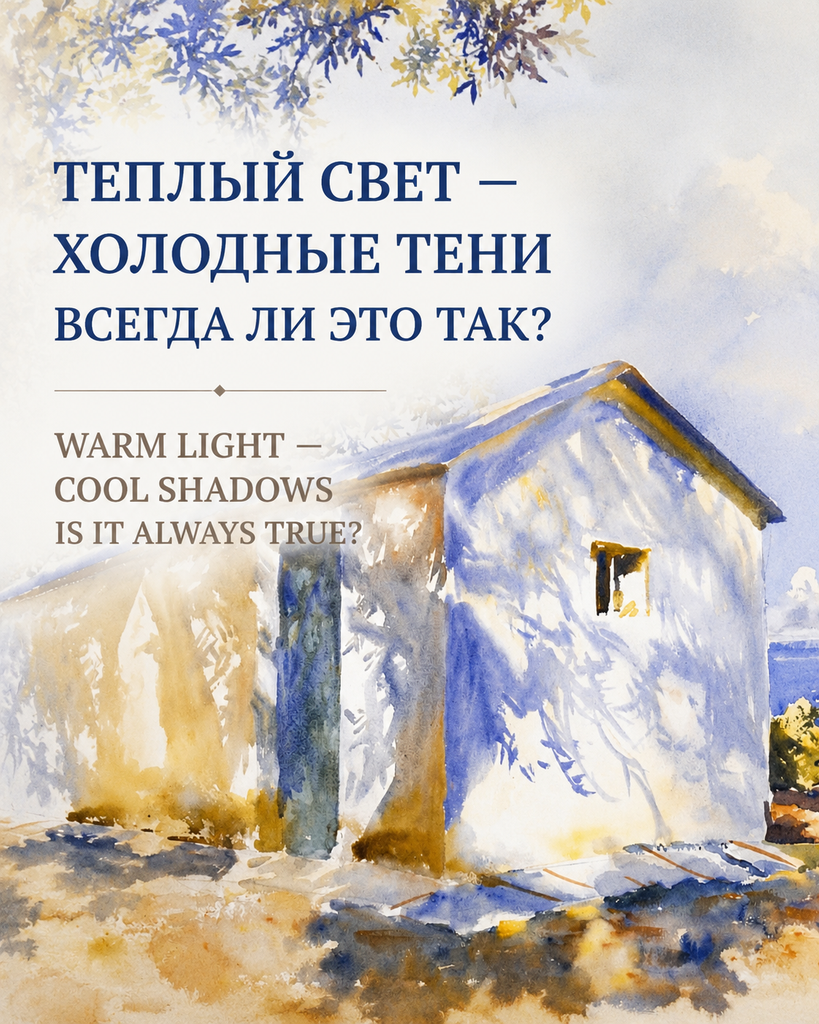
You’ve probably heard this rule many times. And yes, it often works—but it’s important to understand that it’s not a universal law of painting. It’s simply one lighting situation.
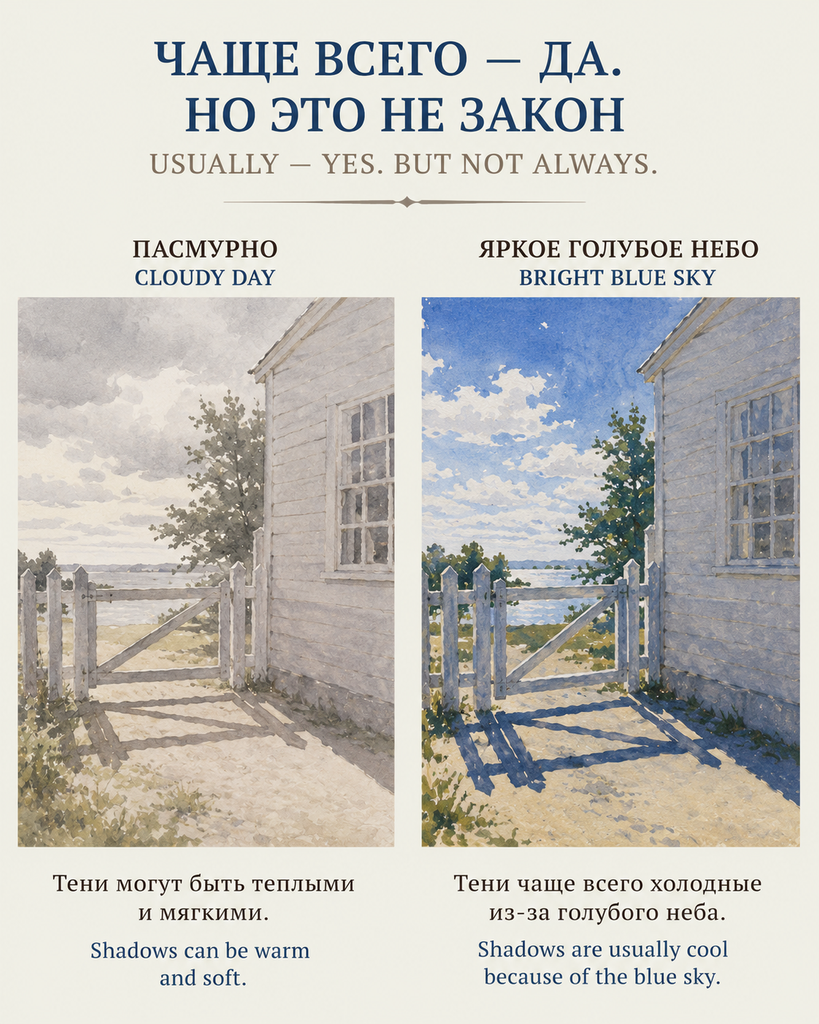
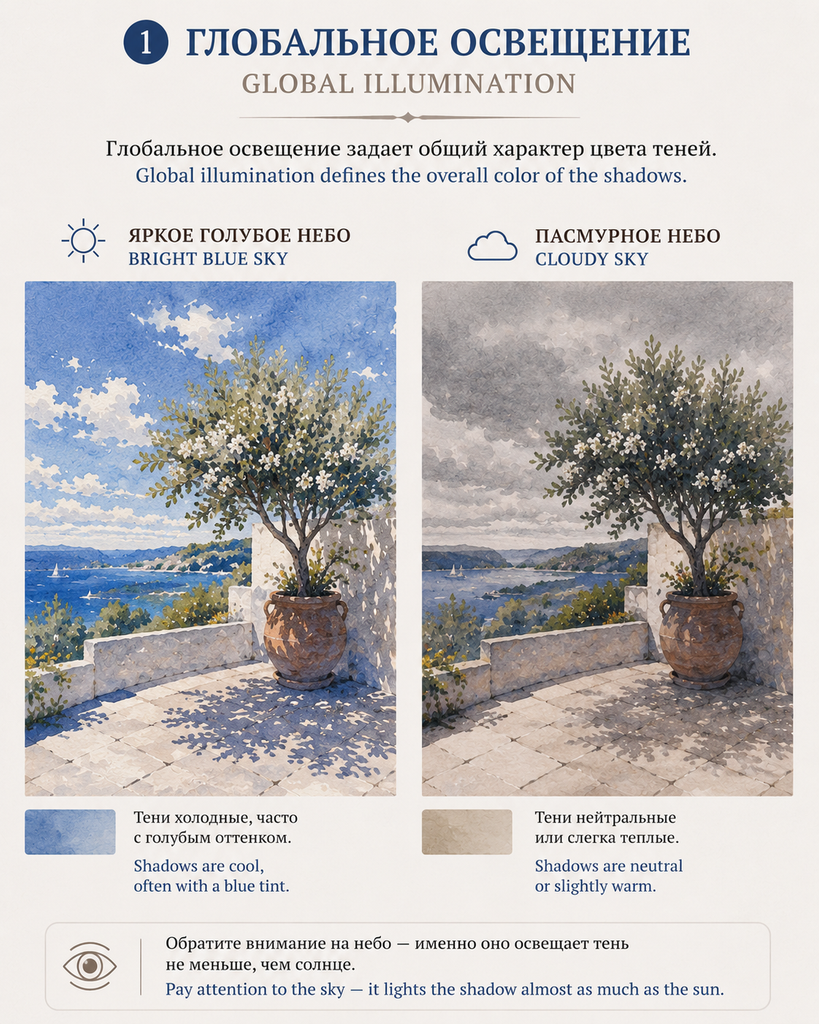
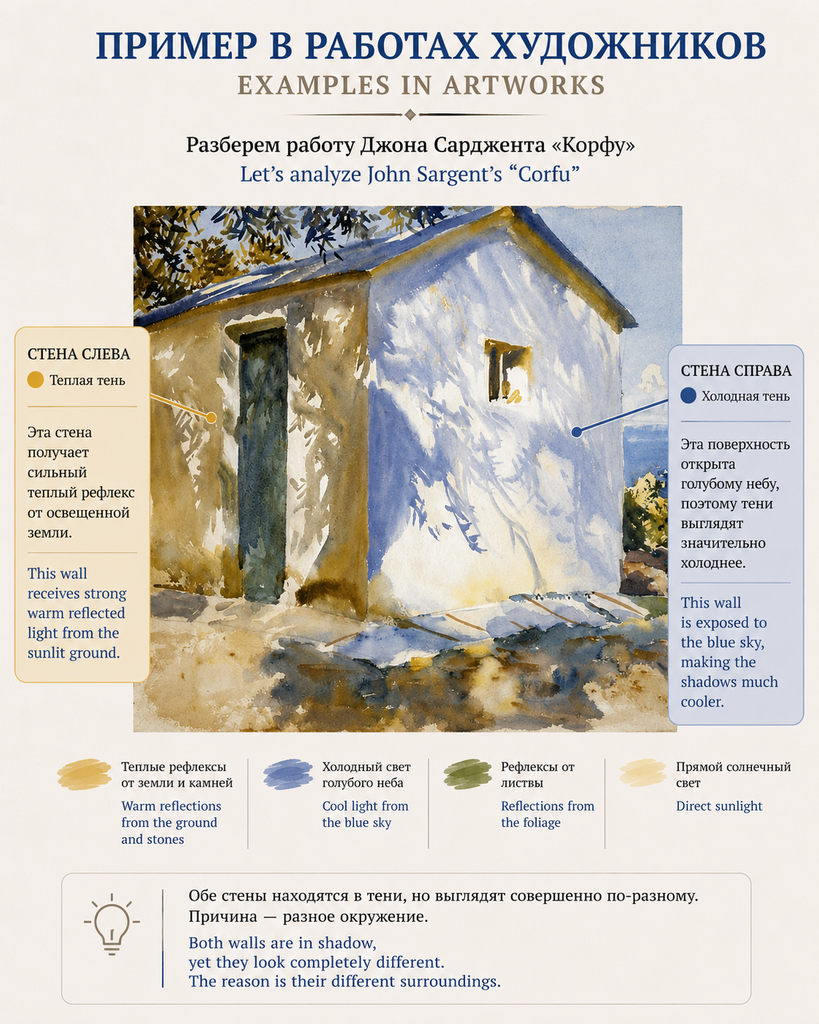
On a clear day, sunlight is usually warm, while the blue sky becomes the main source of cool ambient light. As a result, shadows often appear cooler. This is where the well-known rule comes from.
However, change the lighting conditions, and the color of the shadows changes as well.
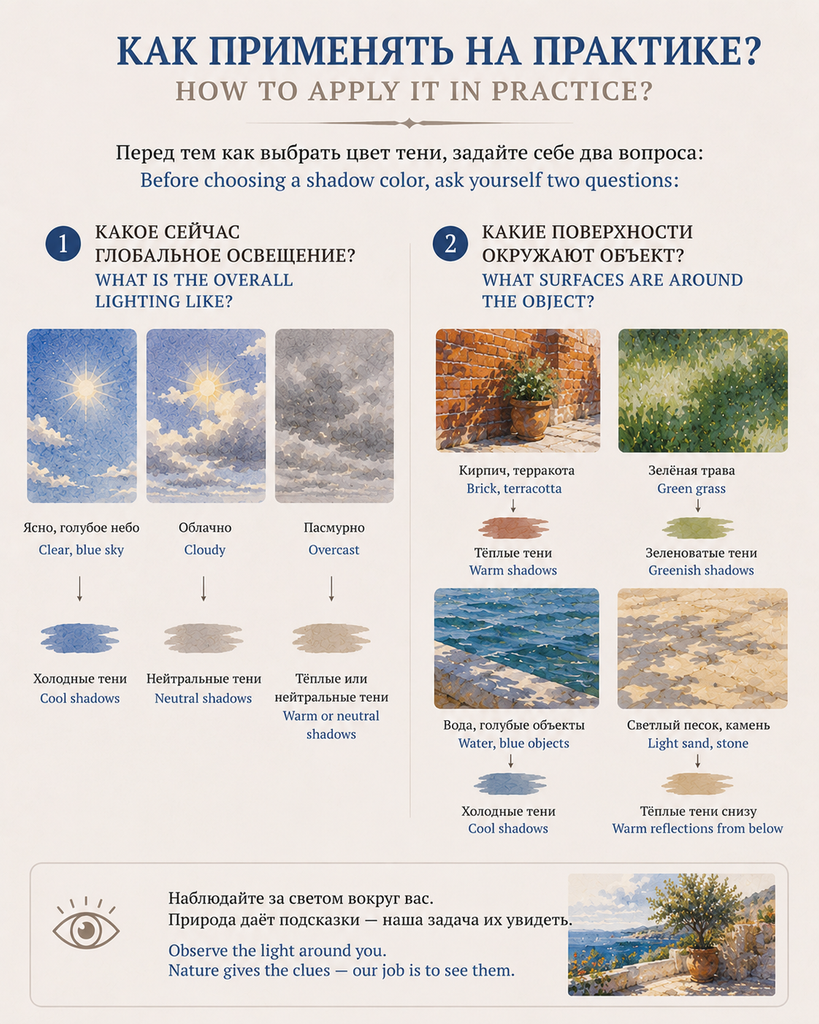
For example:
• on an overcast day, shadows become much less cool;
• next to a red brick wall, they pick up warm reflected light;
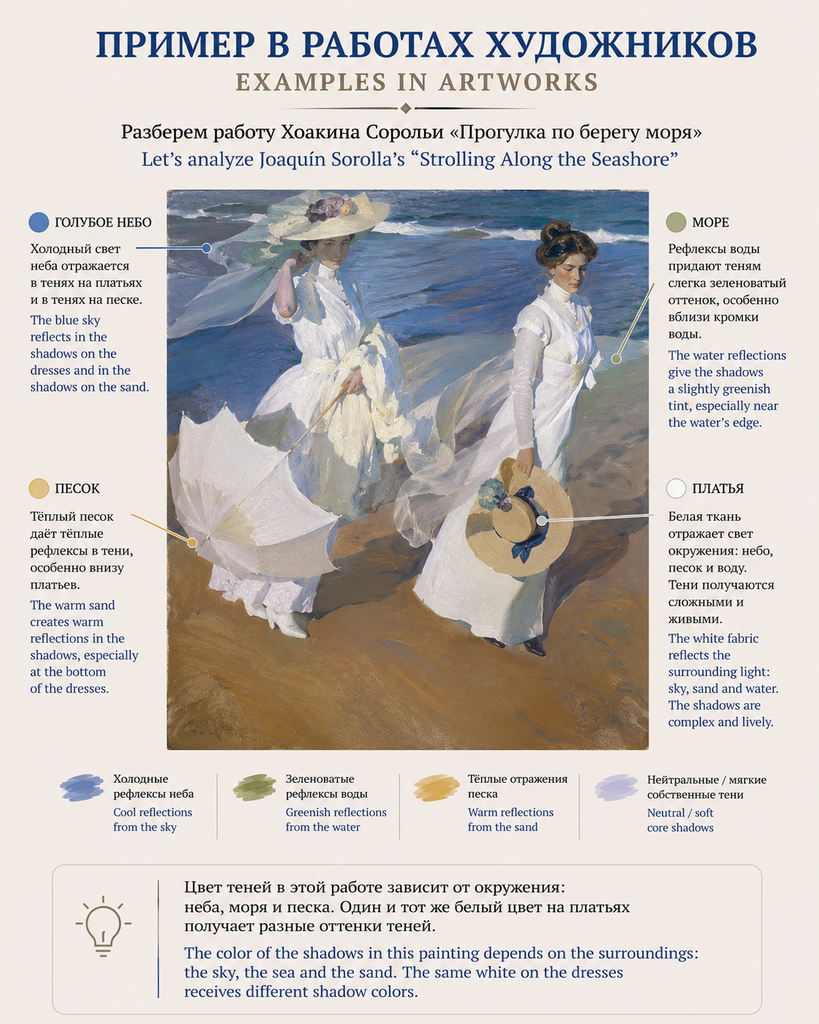
• beside green grass, they often take on a greenish tint;
• near water, they become cooler and bluer;
• sand, snow, or light-colored stone can add warm reflected light into the shadows.
This is why experienced painters don’t rely on a single rule when mixing shadow colors. Instead, they observe the entire lighting environment—the color of the sky, the quality of the light, and the surrounding surfaces.