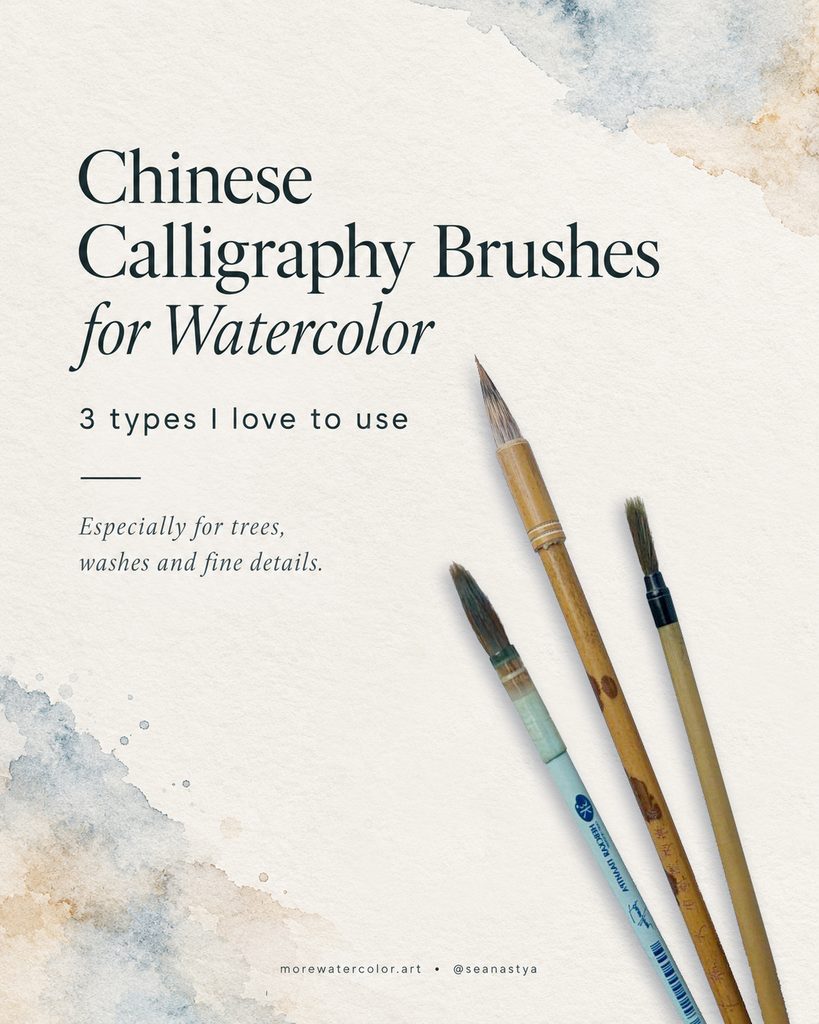
I’ve been asked quite a few times about the Chinese calligraphy brushes I use in my watercolor work, so I decided to put together a small guide.
These brushes are especially interesting for trees, washes and expressive details because their shape and hair behave quite differently from the round watercolor brushes many of us are used to.
In this post I’m sharing three types I particularly like:
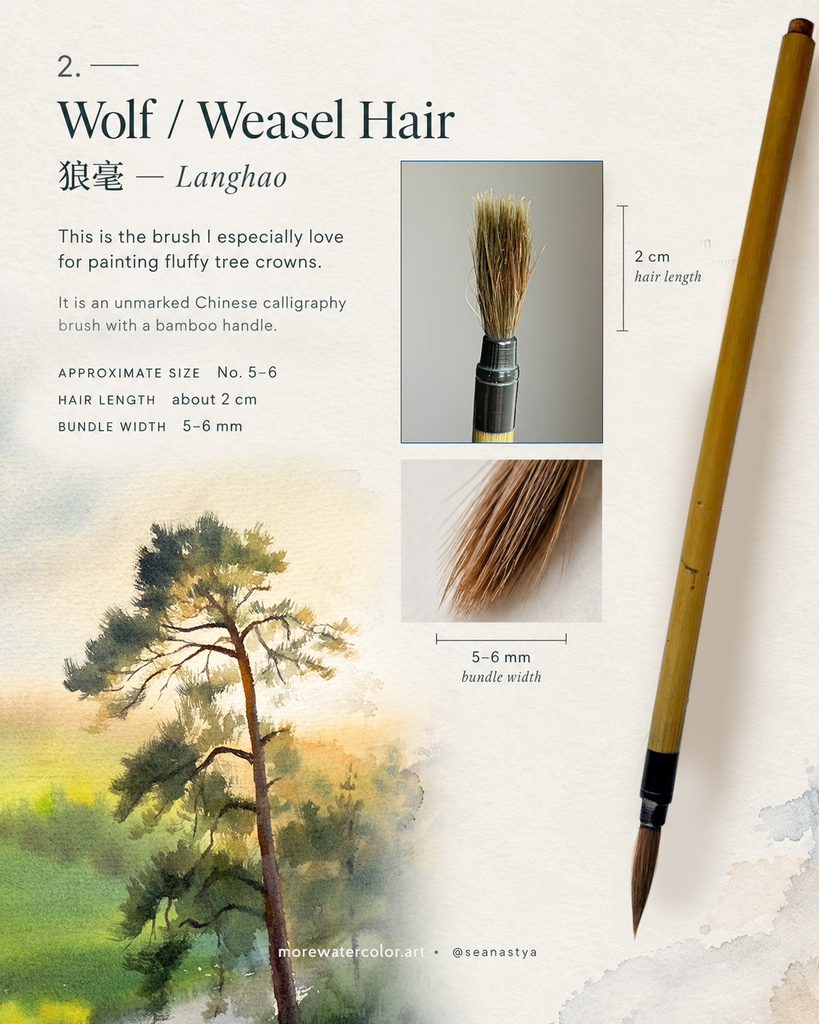
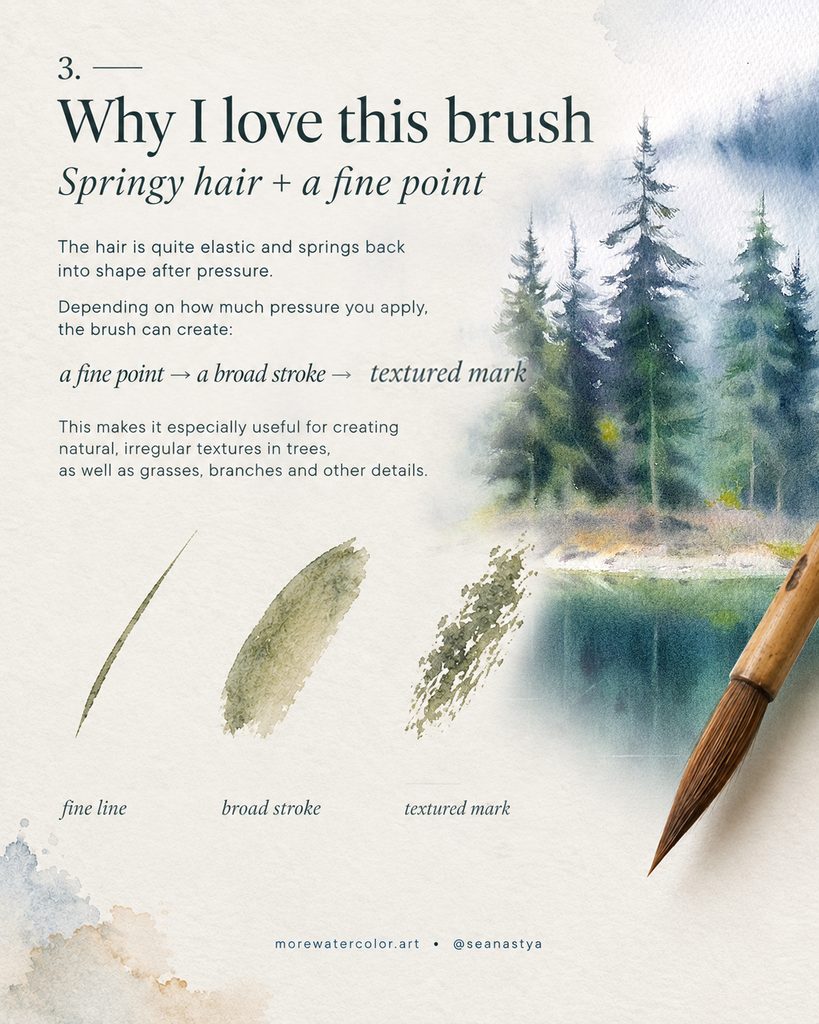
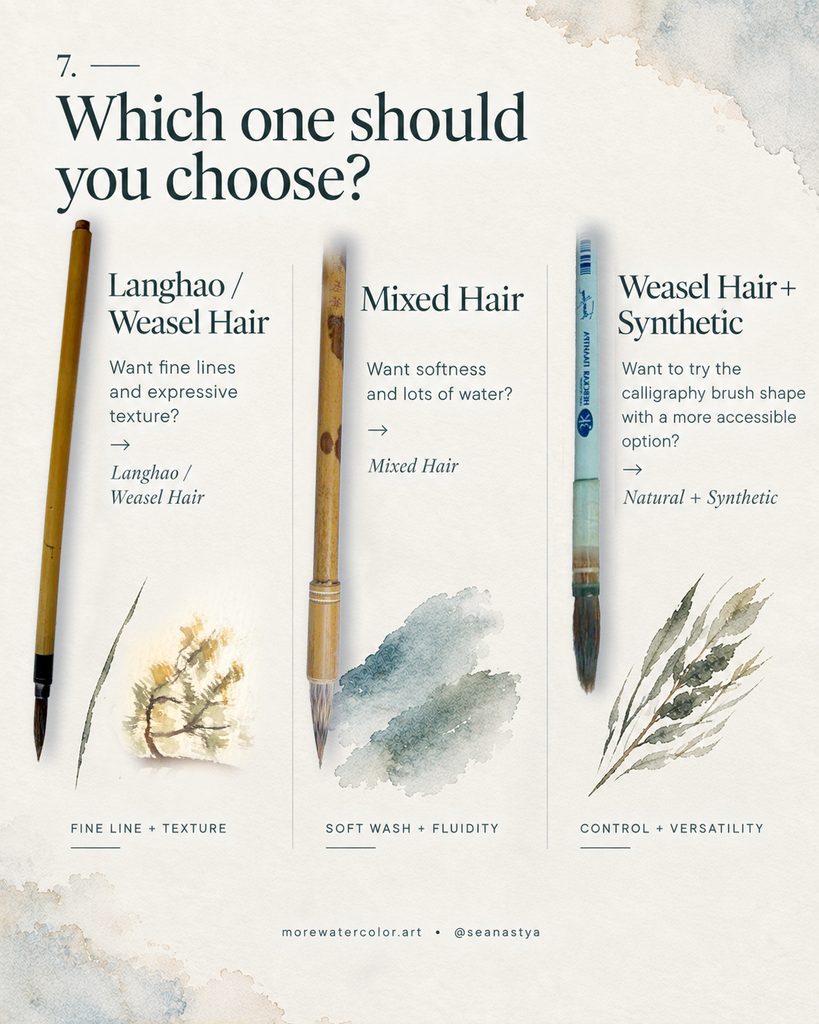
- Langhao (狼毫) — traditionally associated with weasel hair. I especially love this type for fluffy tree crowns. The springy hair can move from a very fine point to a broad, textured mark depending on the pressure.
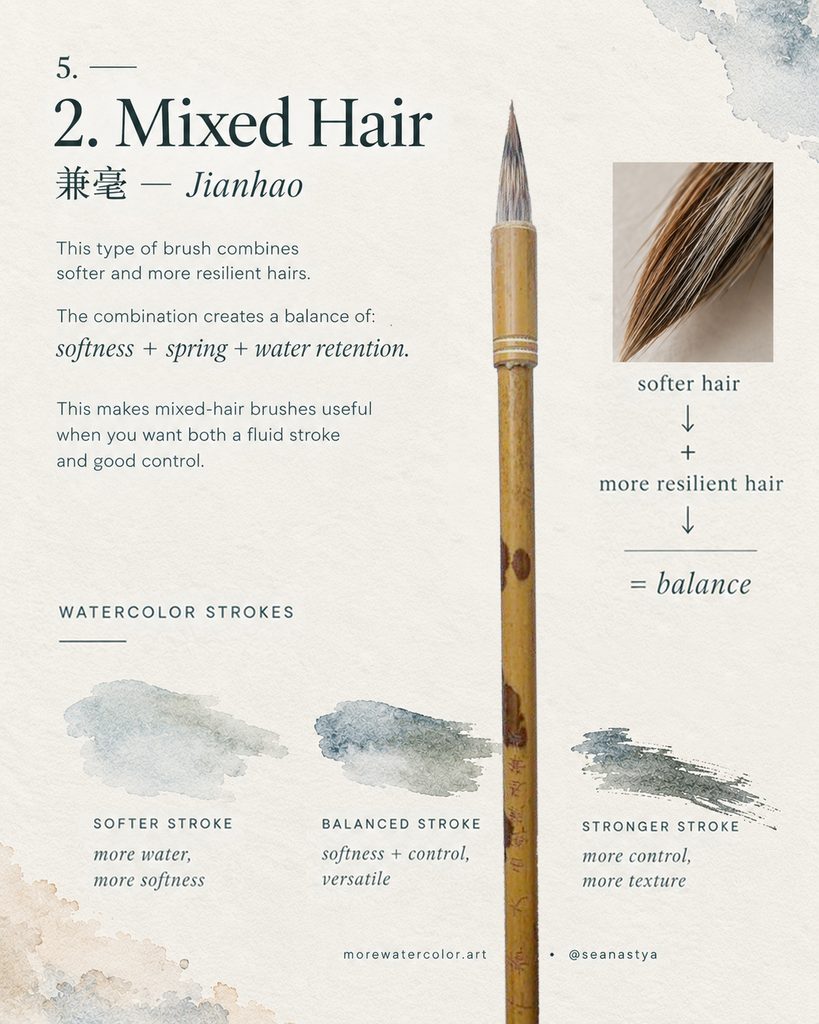
- Jianhao (兼毫) — mixed hair, combining softer and more resilient fibers. This gives a nice balance between softness, water retention and control.
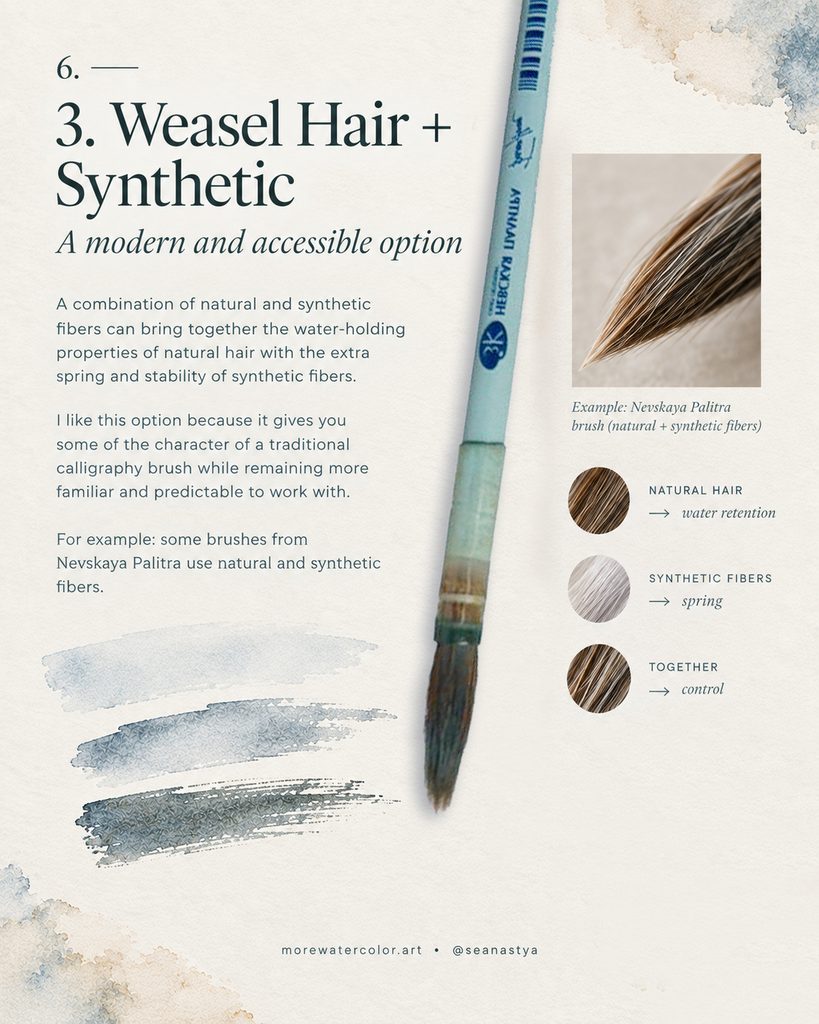
- Natural + synthetic hair — a more accessible option that combines some of the water-holding properties of natural hair with the spring and stability of synthetic fibers.
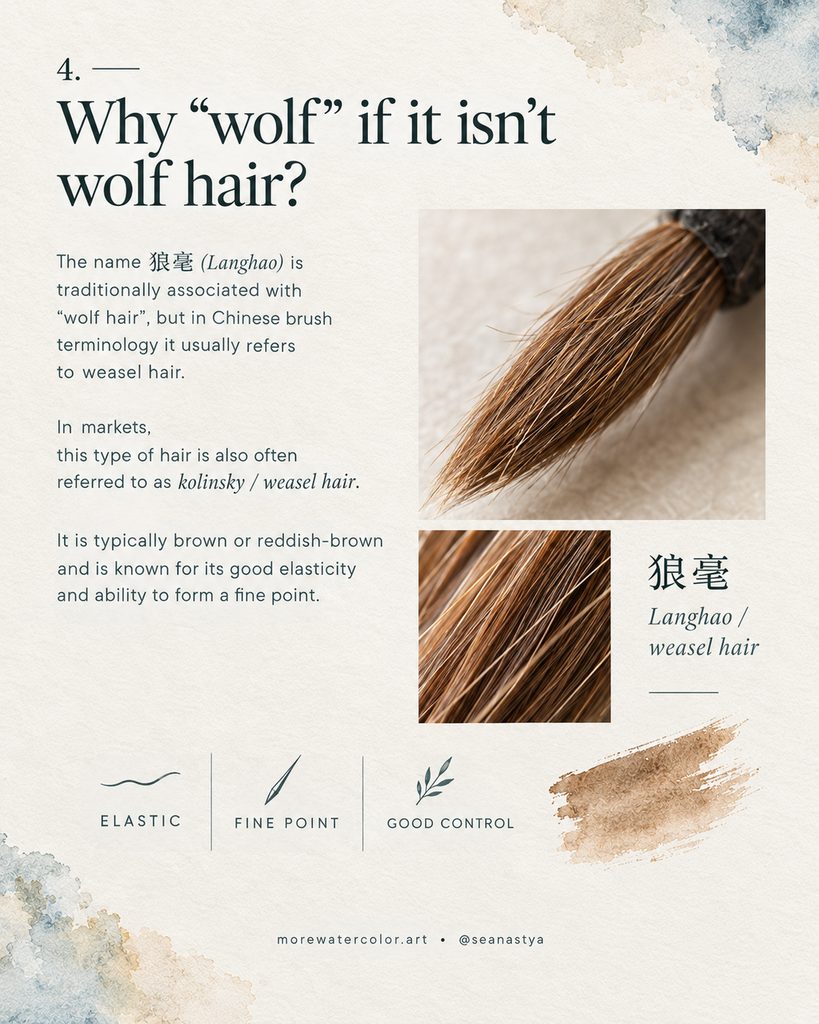
I also included a closer look at what “Langhao” actually means, because the name can be a little confusing: although 狼毫 literally refers to “wolf hair”, in Chinese brush terminology it generally refers to weasel hair.
One of the things I love most about these brushes is that they can produce marks that feel much less predictable and uniform. With the right pressure, a single brush can create a fine line, a broad stroke and an irregular texture — which is particularly useful when painting natural forms.
I hope this guide helps you look at calligraphy brushes a little differently and perhaps try one in your own watercolor practice.
Have you ever used a Chinese calligraphy brush for watercolor? Which type do you like most?