About the course
Water That Lets Light Through
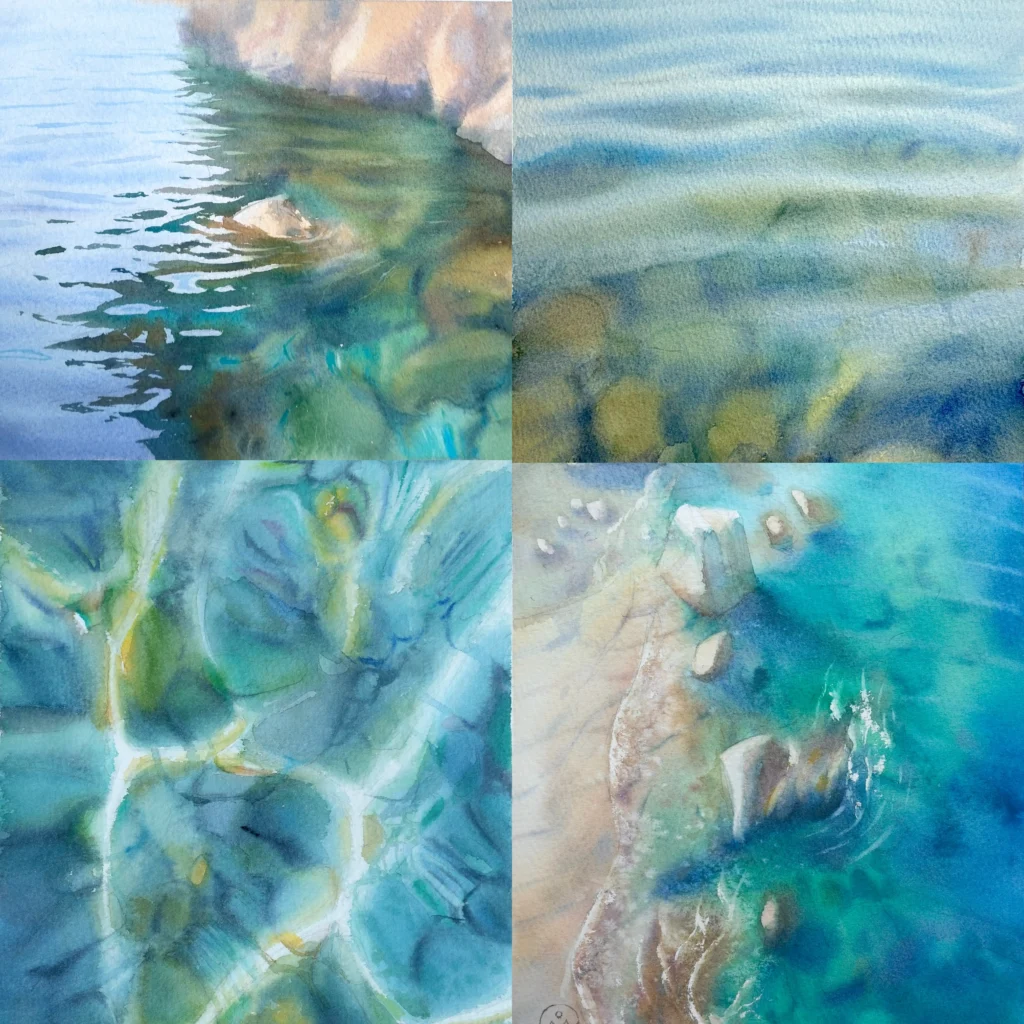
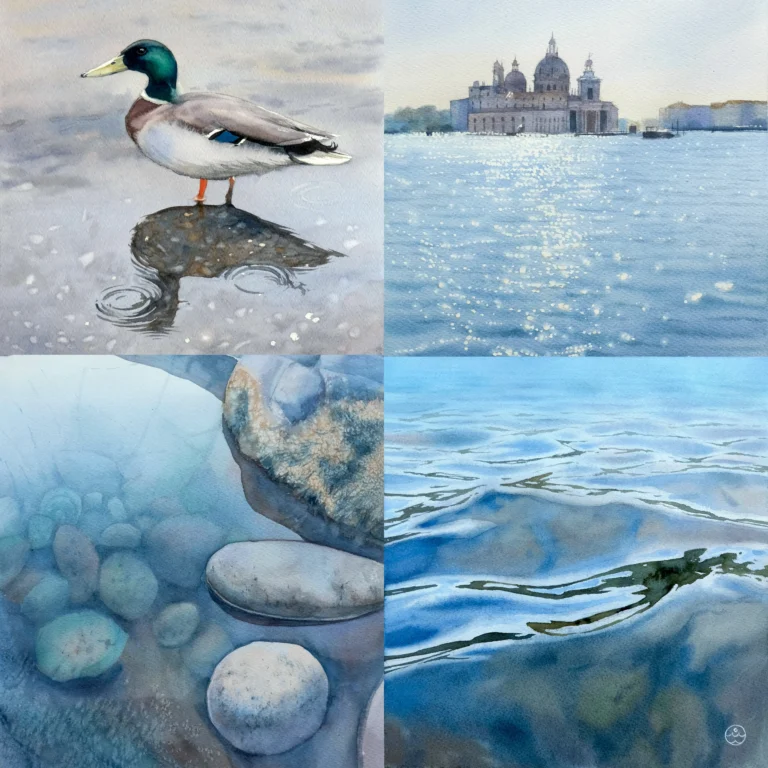
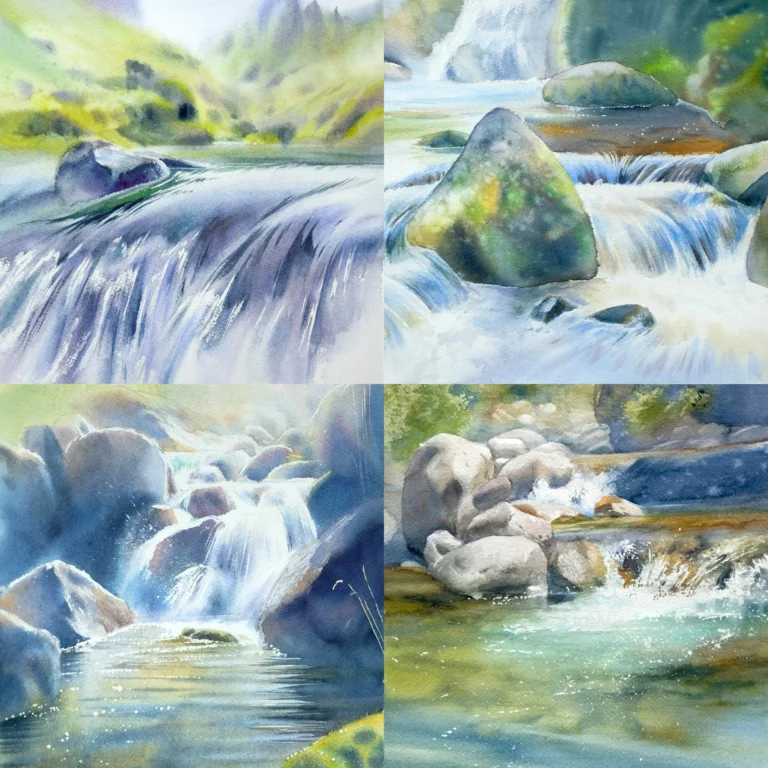
The shore is the best teacher of transparency. There are hardly any flat, repeating colours here: the water reflects the sky, the rocks can be seen beneath the surface, and the foam appears where we leave the paper untouched. I’ll explain why water takes on different shades of blue and turquoise, how depth, light and other physical factors affect its colour, and which colour mixes can help us convey these changes in watercolour.
Across four lessons, we’ll explore the coast from different viewpoints: starting with calm water near the horizon, then moving closer to look at reflections along the shore, and finally focusing on underwater rocks and the effects of light and underwater distortion.
In real time, with detailed explanations
Each wash is shown from the first brushstroke to the last, with a full explanation of the technique, the paper’s level of wetness, and the amount of pigment on the brush.
Learn to see and analyse
Transparency is something to understand, not simply copy. Each lesson adds to your understanding of how water works, giving you experience you can apply to your own paintings and subjects.
Lifetime access
Unlimited access at your own pace: come back to any lesson whenever you need. Rewatch them later and you may notice new details in both the technique and the process.
What you will learn
Six habits that make water look wet
- How to keep the sea transparent all the way to the final layer
- How to create a clean horizon that enhances depth, and soft, blurred edges
- How to preserve the white of the paper for foam, splashes and highlights
- How to show the difference between rocks underwater and on dry land
- A warm–cool palette — from shallow water to depth, including the colours of underwater reflections and shadows
- How to know when a wash is finished — and when to stop
The programme
Four lessons, one coast
About four and a half hours of painting in total. The lessons follow one another, but each is a finished painting on its own.

Lesson 01
Water near the shore
52 min
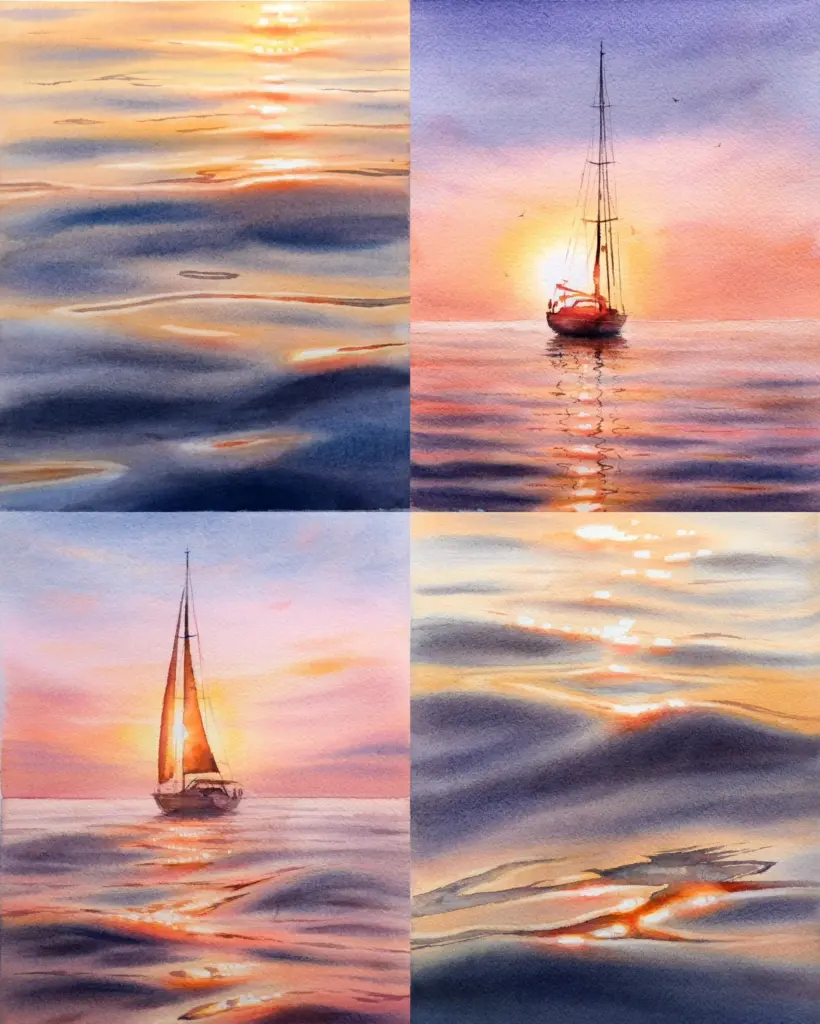
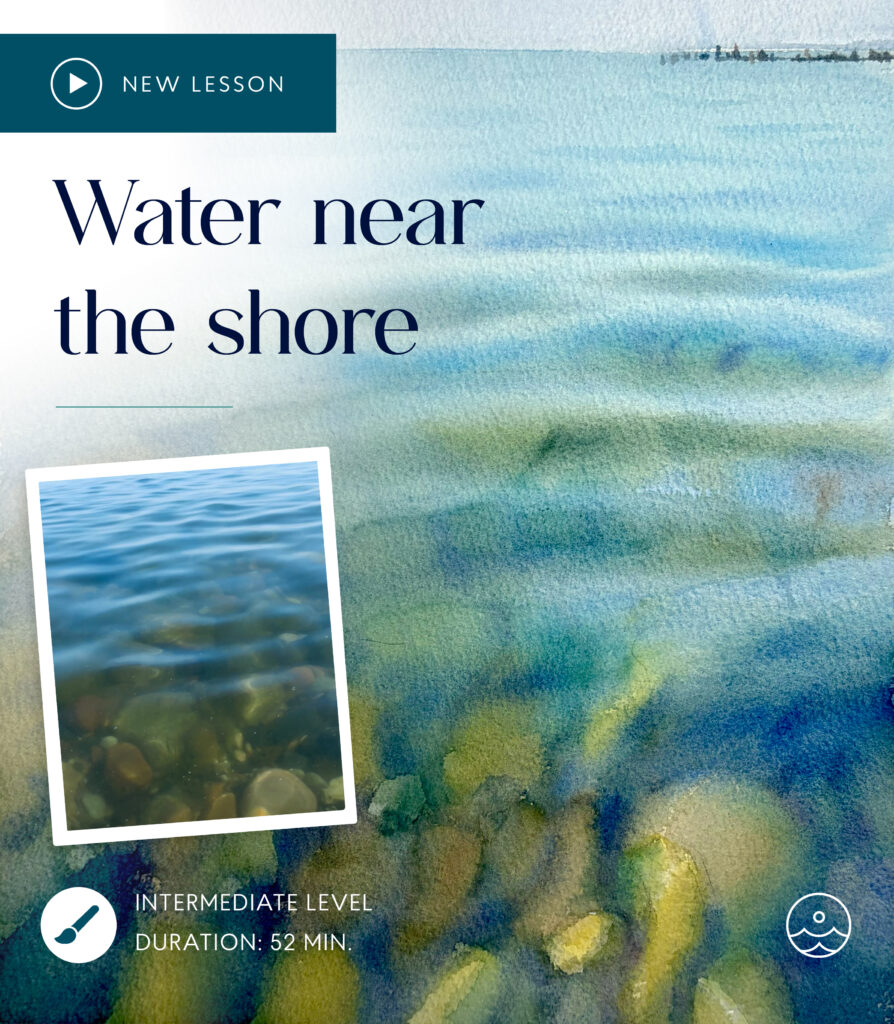
In this lesson, we’ll dive back into the fascinating topic of water transparency. Together we’ll paint a small watercolor study, practicing how to create the illusion of rocks beneath the surface, capture the volume and movement of the waves, and make clear water look truly convincing.
- Calm sea and soft horizontal waves
- A quiet, barely visible distant shoreline on the horizon
- Rocks and seaweed visible in the foreground
Lesson 02
The coast from above
1 h 16 min
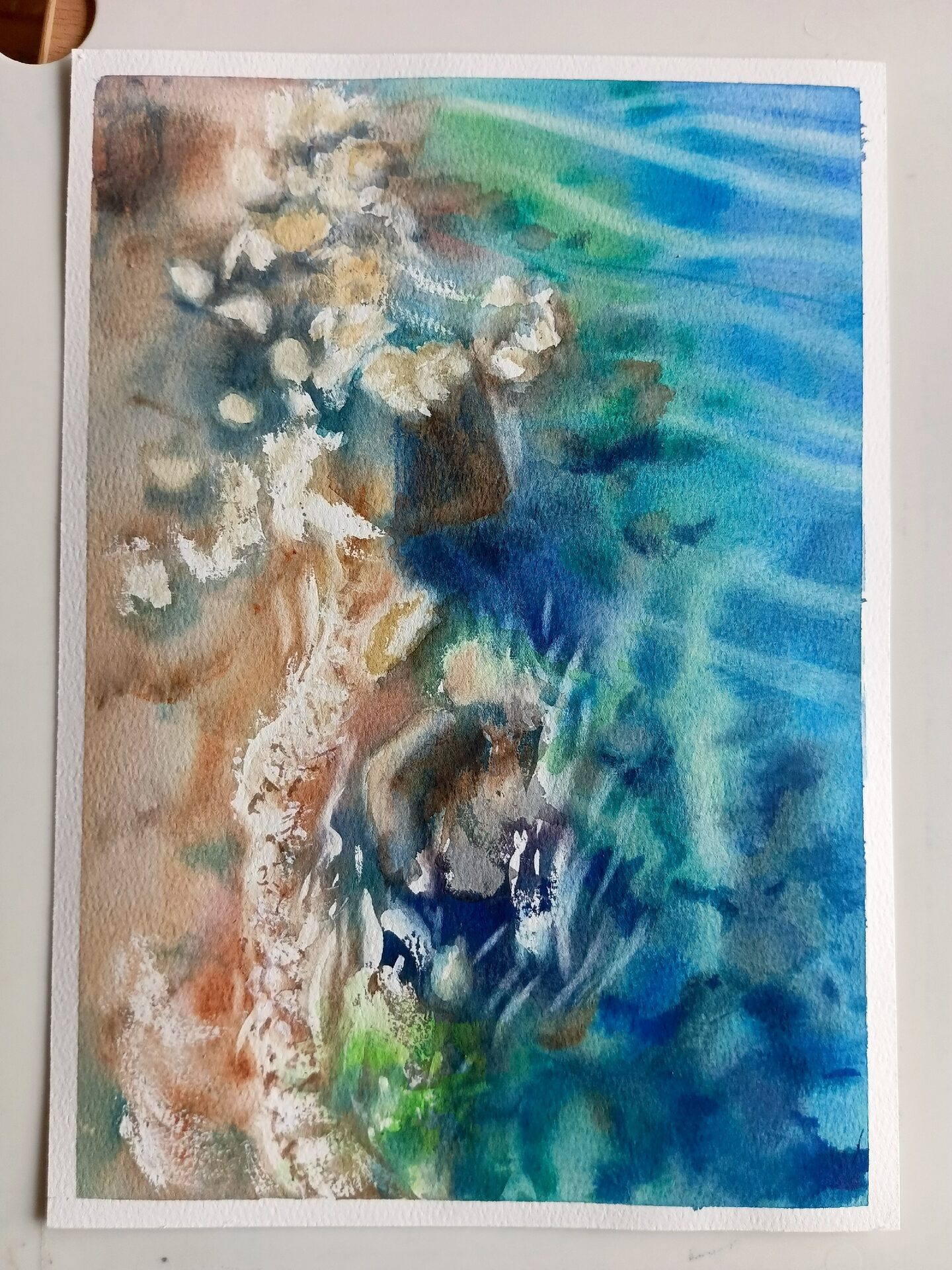
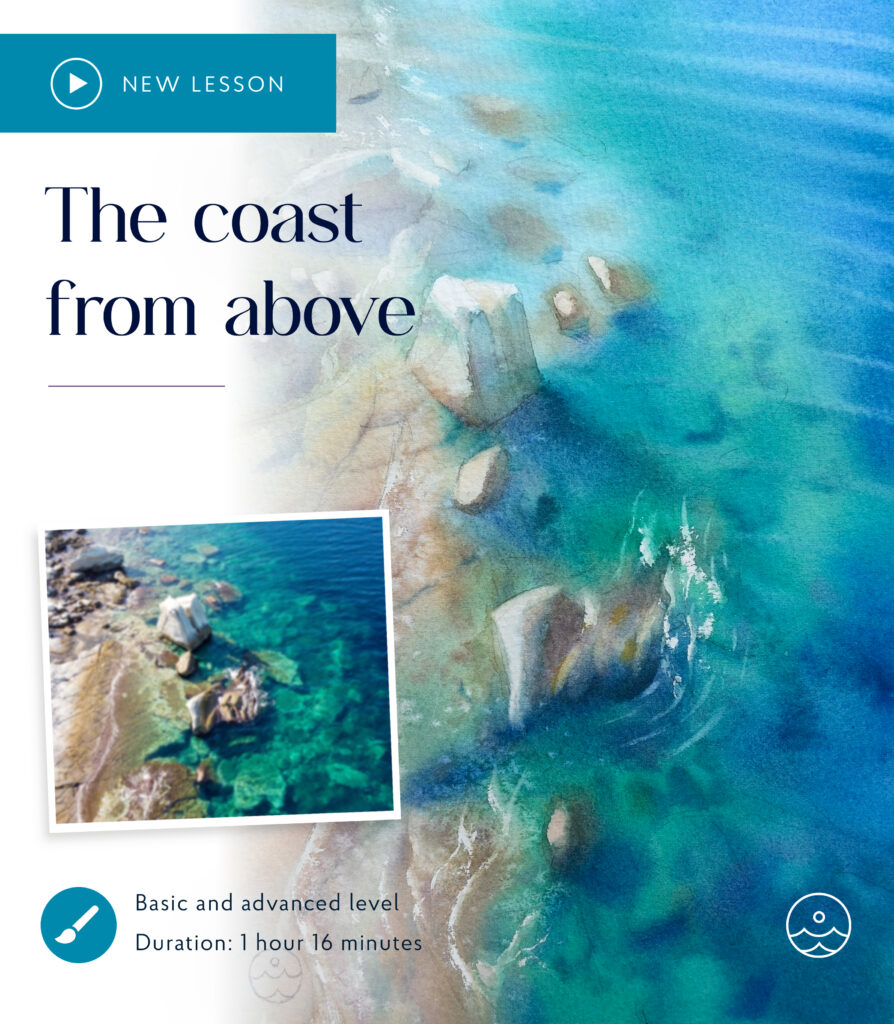
We’ll practice depicting different water depths, creating the volume of the rocks, and painting the effects of sea foam.
- A bird’s-eye view: large rocks in the water
- The transition from turquoise shallows to deep blue water
- Foam and splashes — how to create texture and white areas without using white gouache
Lesson 03
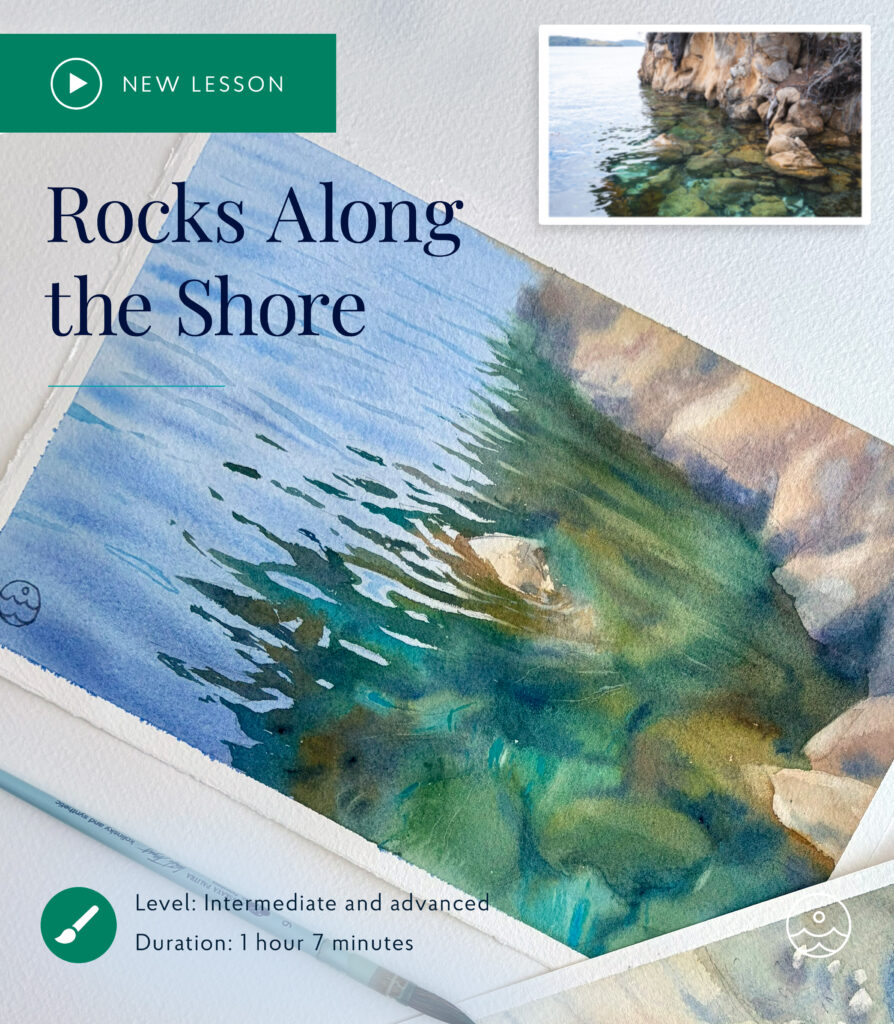
Rocks Along the Shore
1 h 07 min
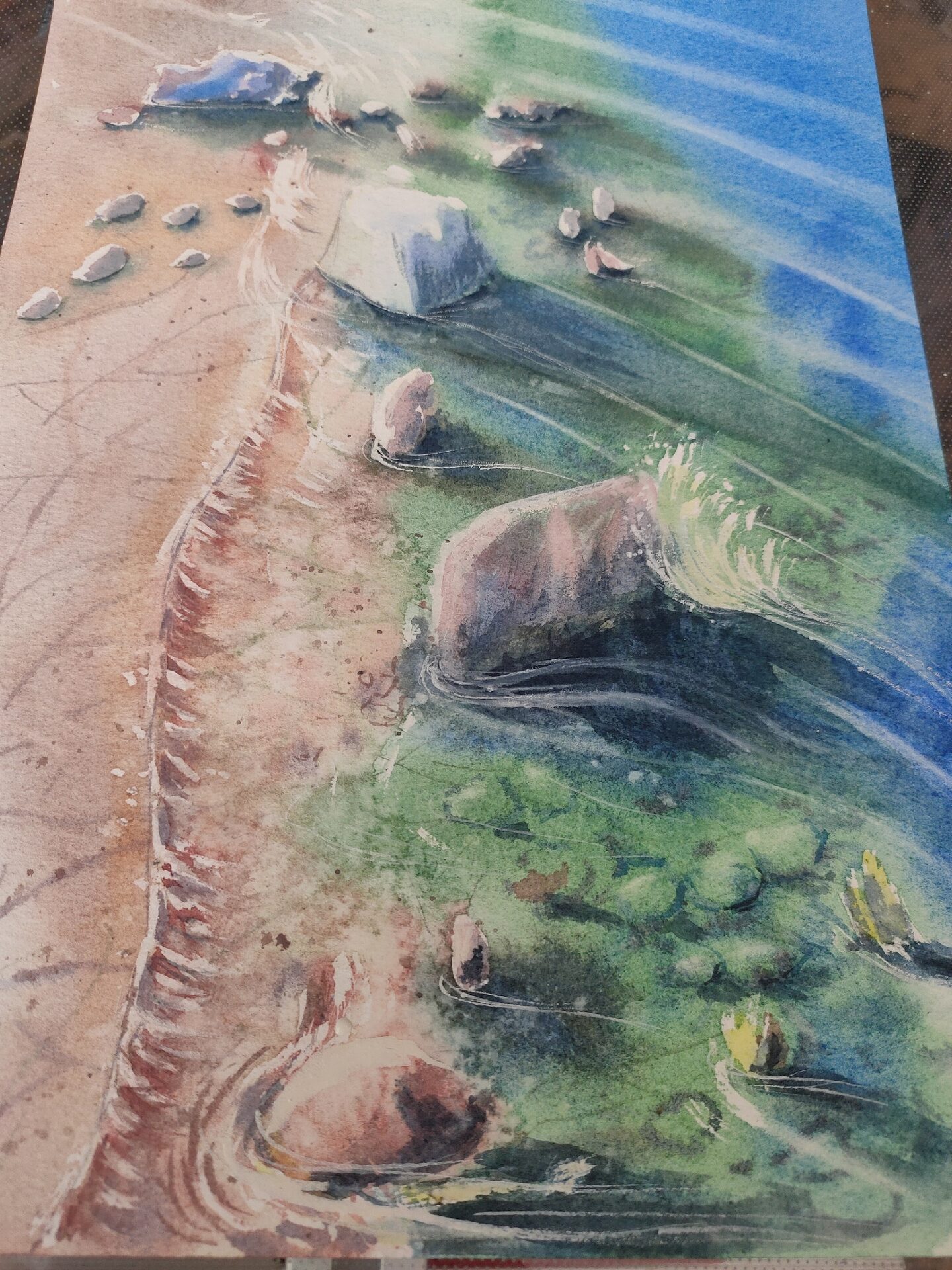
In the previous lesson, we explored the coastline from a bird’s-eye view. In this lesson, we’ll move closer to take a detailed look at the shoreline rocks, studying the subtle color differences between dry rocks and those beneath the water. You’ll learn a challenging multi-color wash technique, create depth by contrasting the distant cliff painted wet-on-wet with the carefully rendered foreground, and capture the transparency and richness of the water.
- The “dance of reflections” on the surface of the water
- A soft wet-on-wet rock in the background with a crisp foreground
- Multicoloured washes for rocks just beneath the surface
Lesson 04
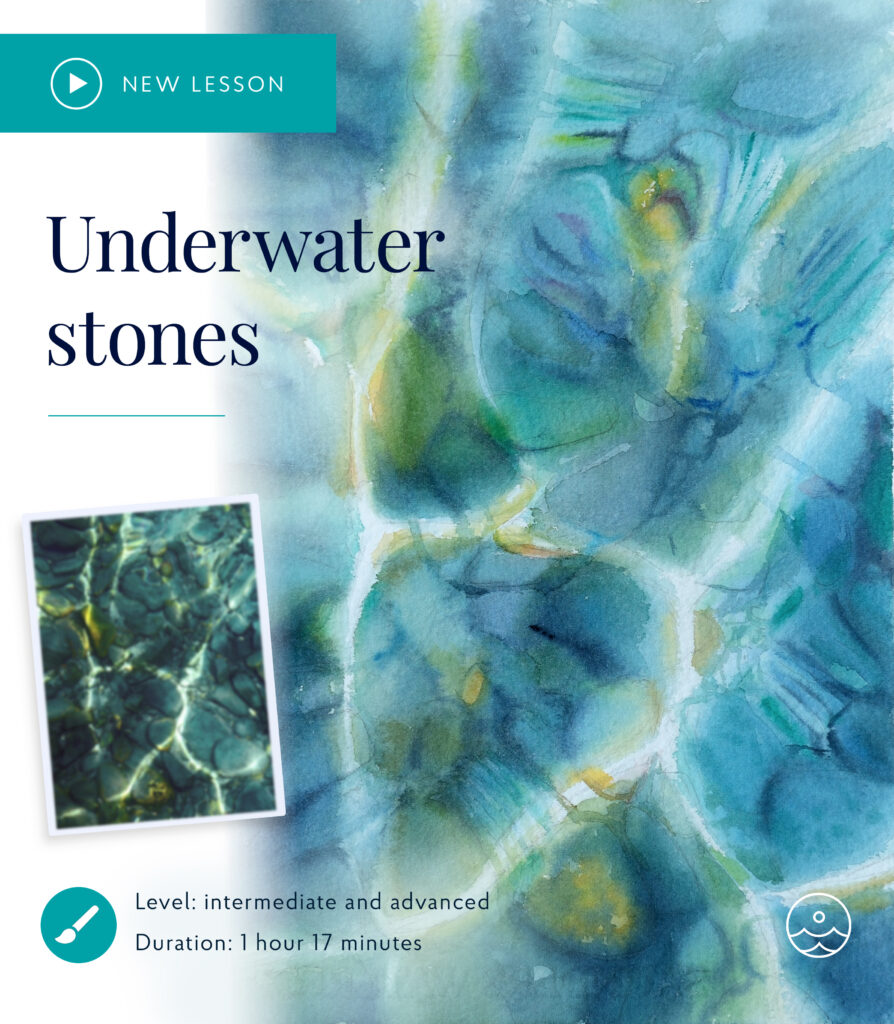
Underwater stones
1 h 17 min
In this lesson, we will move in very close to the water to examine the effects of light that occur underwater, as well as visual distortions. I will demonstrate the techniques I use for painting this type of subject and explain the approaches I use to simplify working with a large number of elements while maintaining a cohesive visual impression and composition. I will also explain how colors change underwater and what caustics are.
- Sunlight caustics — the play of light on the seabed
- Warm and cool tones for light and shadows
- Underwater distortions in close-up
Enroll in the watercolor course
A Foundation for Understanding Transparency
One payment, lifetime access. The lessons stay in your account and can be watched as many times as you like.
The Transparency of the Coast
Watch at your own pace, forever.
$45
one-time payment, lifetime access
- All four lessons in full length
- Materials and palette list
- Watch on any device
The Transparency of the Coast — with Personal Feedback
The same four lessons, and I look at your paintings.
$65
one-time payment, lifetime access
- Everything from the course
- My written critique of your work
- Answers to your questions
Secure checkout · instant access · write to me if anything goes wrong
What is included
Everything You Need to Paint Water
Four full lessons
About six and a half hours of painting in real time, in 4K
Materials list
The exact pigments, paper and brushes I use, with a workable substitute for every item on the list.
Reference photos
The photographs the four paintings were made from, in printable resolution.
Pencil drawings
Ready pencil drawings to trace, if you would rather spend the evening on the paint than on the drawing.
Lifetime access
Buy once and watch whenever you like — the lessons do not expire and do not disappear.
Answers from me
Send your work or a question and I will answer personally — that is the part the videos cannot do.
Before you start
Questions students ask
I have never painted in watercolour. Is this course for me?
Yes, this course is suitable for beginners too. We work on small, manageable formats, and I explain each step in detail, including why I make certain decisions and what to pay attention to at each stage.
What materials do I need?
Cotton paper, pigments and brushes. The full list comes with the course, and every item on it has a cheaper substitute that works.
How long do I have access?
Forever. The lessons stay in your account, and you can watch them as many times as you like, at whatever pace suits you.
Worried that something might be skipped in the lesson and you won’t understand how it was done?
Nothing is sped up or skipped. I explain when we need to let a wash dry completely before moving on to the next stage. And if something doesn’t go as planned, I show you how to fix it along the way.
Will I be able to keep up with your pace? Is there a pencil sketching stage?
Yes. Every lesson includes a pencil sketching stage. Everyone works at a different pace, so I try to keep a calm, steady rhythm. You can pause the lesson at any point and finish the step before continuing.
Can I watch on a phone or a tablet?
Yes. The player works on any device, and you can pause and rewind as often as you need — most students paint with the lesson running beside them.
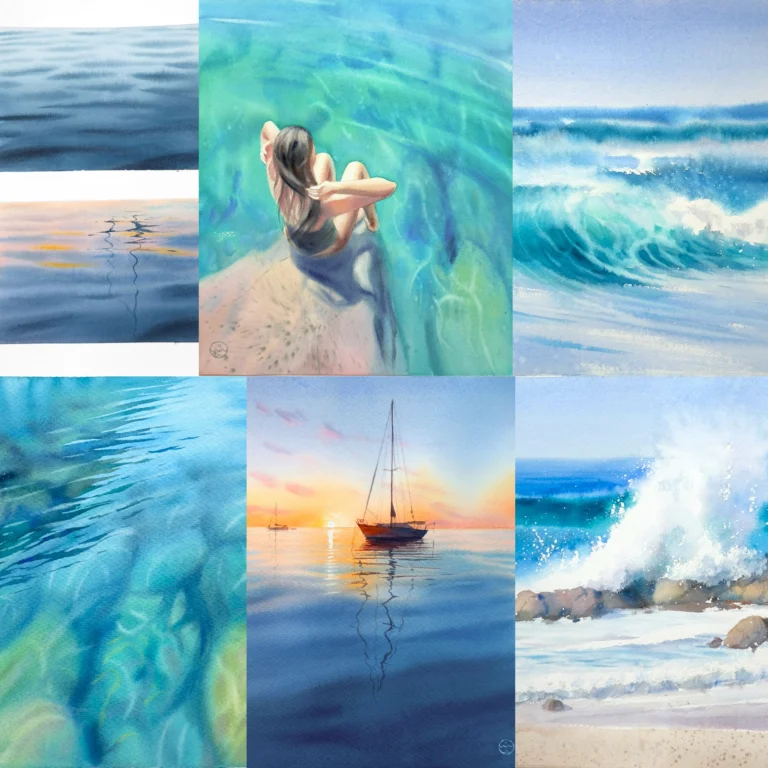
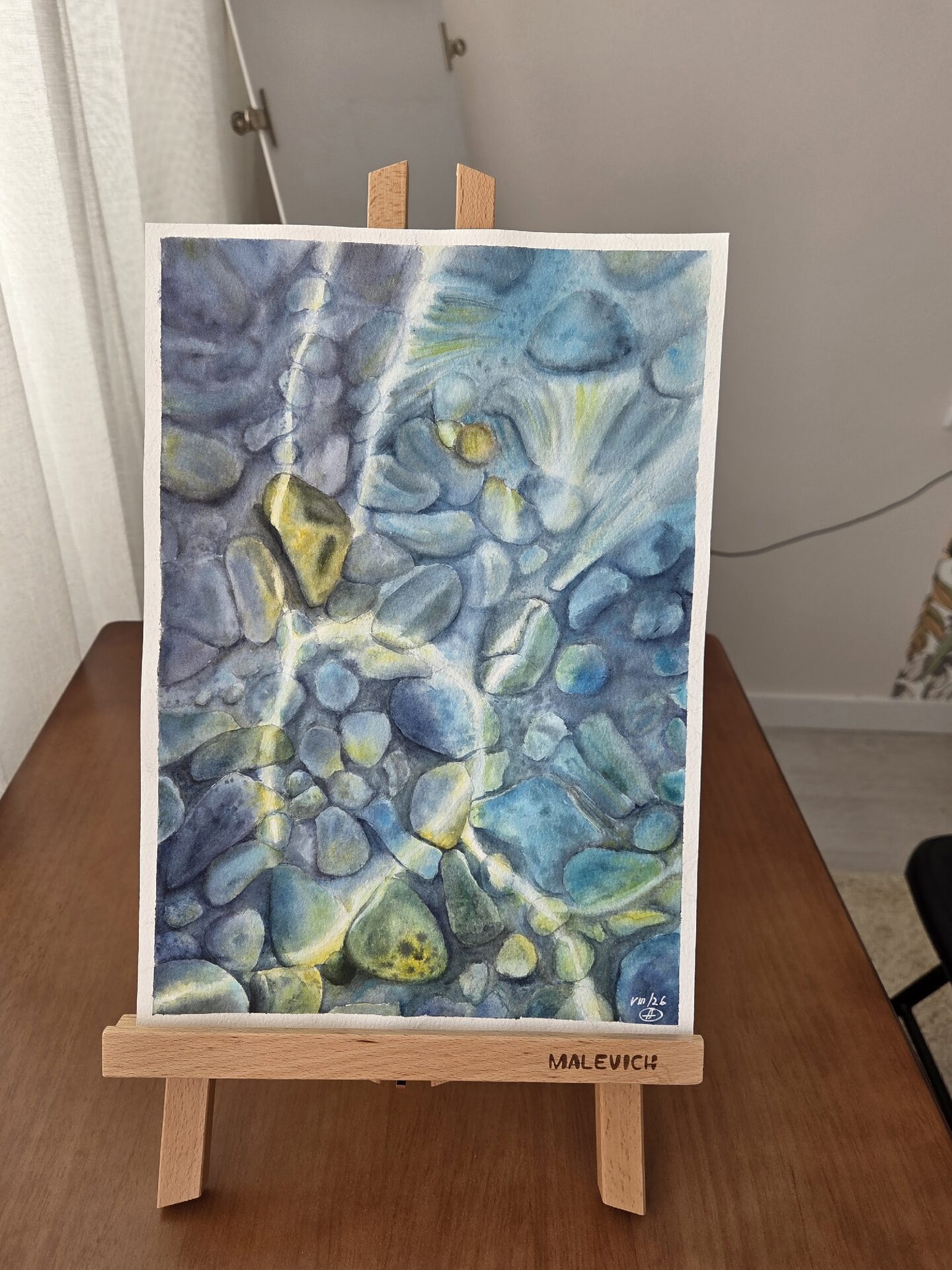
Student's artworks

Who teaches it
Anastasiia Petriaeva
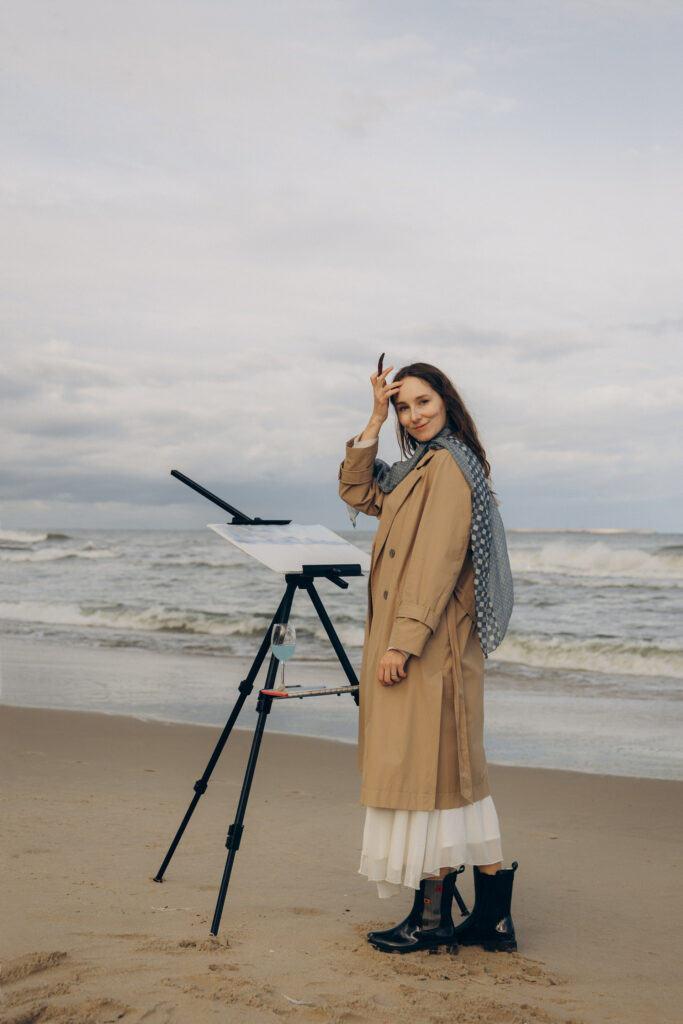
I am a practicing watercolour artist and the author of video courses translated into several languages. I graduated with honours from the Academy of Architecture and Art.
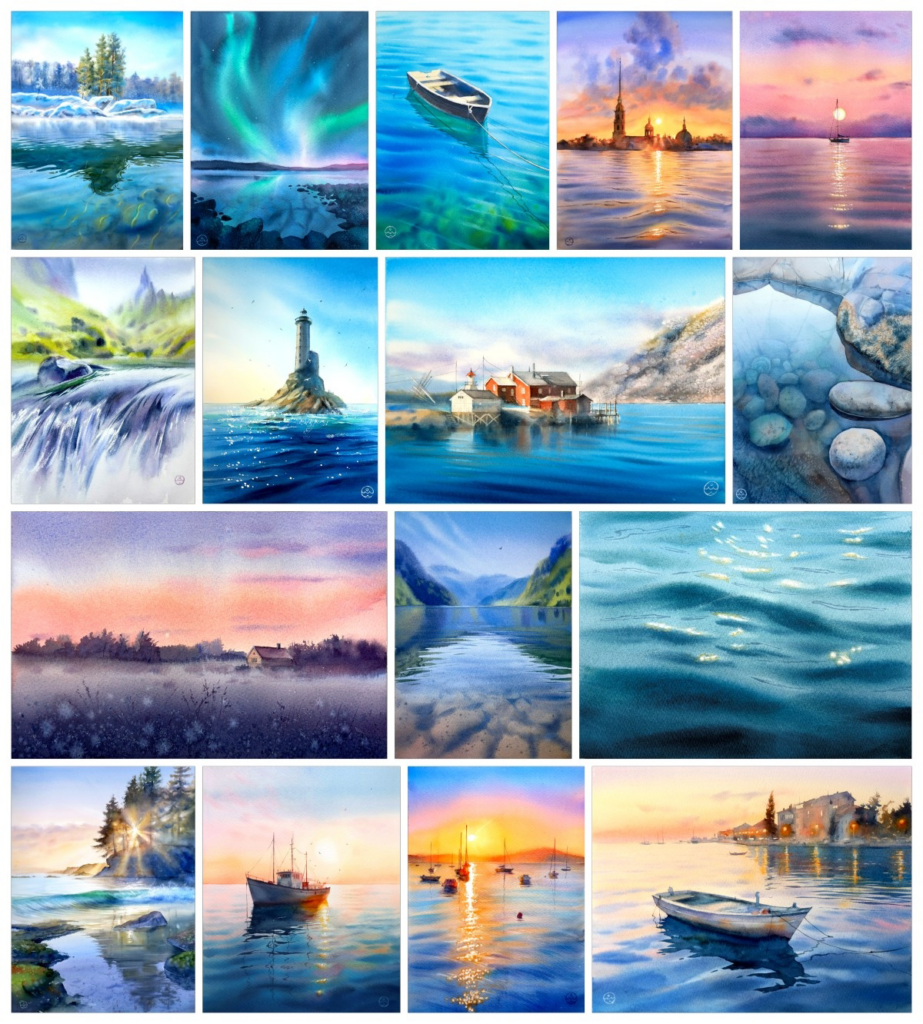
The coast is my own subject, not a teaching exercise: most of the paintings in my shop started as water, stone and light on some northern shore.
Other courses
If the coast is not your subject yet
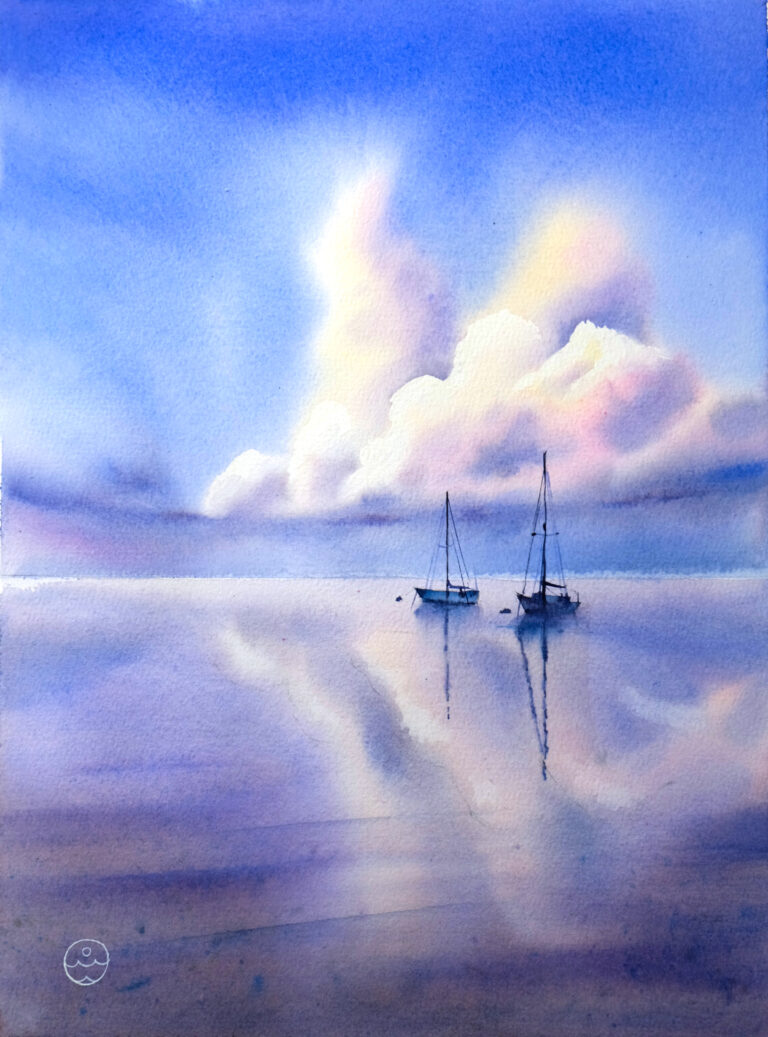
The same way of working, other motifs: clouds, reflections, city rain. Every course is full-length and stays yours after purchase.
The Transparency of the Coast
Start with the first wash
Four lessons, one coast, and paper that finally lets the light through.